Upgrades

AlleleID: Bacterial identification and species detection using primer and probe design to identify sequence motifs.AlleleID® 7.70 Released
Includes support for the latest genomic databases available at NCBI.

AlleleID® 7.60 Released
The upgrade offers compatibility with Snow Leopard, Mac OS X 10.6. It also accommodates changes at NCBI BLAST server & fixes to reported problems.

AlleleID® 7.50 Released
AlleleID® can now design strain differentiation multiplex assays for Suspension Array systems based on Luminex's xMAP® technology. If you are working with closely related organisms, this functionality will enable you to run experiments in a single reaction vessel.

Support for single template xMAP® assays is also included wherein oligos are designed for rapid and high-throughput detection of nucleic acid sequences. You can even use pre-designed proven oligos and design oligos for the rest of the sequences to form a multiplex set compatible with them.

Additionally, you can use a pre-designed or published or well proven forward or reverse primer and have AlleleID® design the rest of the assay. For example, for a given forward primer, AlleleID® would design the reverse primer for SYBR® Green assays and would design both the reverse primer and the TaqMan® probe for TaqMan® assays.

The multiplexing and design algorithms are enhanced considerably. AlleleID can now design 5-plex assays which are efficient and error free.

The latest genomic databases available at the NCBI BLAST server are also supported.

AlleleID® 7.01 Released
The upgrade includes enhanced support for MLPA probe design based on the new design guidelines laid down by MRC-Holland, the inventors of the technology. The program has been thoroughly tested by MRC-Holland for the accuracy and relevancy of the results. AlleleID can now load sequences from UCSC Genome browser and automatically retrieve exon, repeats and SNP information for further analysis.

The automatic homology avoidance algorithm has been improved considerably to improve the selection of the regions of homology. This and several other parameters have been improvised to enable you to design assays of greater specificity and efficiency.

AlleleID® 7.00 Released
AlleleID® can now design highly specific probes for NEAT assays. NEAT, Non-Enzymatic Amplification Technology, is a genomic testing platform. Using AlleleID® you can design NEAT probes, both for copy number detection and mutation studies.

AlleleID® 6.01 Released
AlleleID® now offers compatibility with Leopard, Mac OS X 10.5. The upgrade also accommodates the latest changes at the mfold and the NCBI BLAST server including support for the latest genomic database.

AlleleID® 6.00 Released
AlleleID® can now design MLPA probes compatible with PamChip® microarrays of PamGene. MLPA users have the choice of either designing mRNA specific, DNA specific or mutation specific probes based on research needs thus reducing the detection time.

AlleleID® 5.01 Released
NCBI recently redesigned the BLAST pages, changing the default interface. The support for old pages was removed on June 11, 2007 and a few more databases were added. AlleleID® 5.01 is released to accomodate these changes.

AlleleID® 5.00 Released
MLPA® Assays- With AlleleID® 5.00, you can design highly specific probes for MLPA® assays. MLPA, short for Multiplex ligation-dependent probe amplification is popularly used for detection of amplifications and deletions in a variety of genes. Using AlleleID® you can design MLPA® probes, both for copy number detection and mutation studies.

Use Pre-designed Probes- For published or pre-designed probes, AlleleID® now designs compatible primers and completes your species or taxa specific assays.

Design Degenerate Primers- You can even design degenerate or mismatch tolerant primers for taxa assays where conservancy is disturbed due to presence of mismatches.

Multiplex TaqMan® Assays- AlleleID® now includes comprehensive support for multiplexing. The program is now equipped with innovative proprietary algorithms to design the most optimal primer-probe sets for multiplex reactions. The sets are chosen by minimizing Tm mismatches and cross dimerization and are made available in a sortable list. For multiplex assays, you can even design oligos for additional sequences that are compatible with the pre-designed sets for certain sequences. This feature may be most useful for incorporating a well-proven reference or housekeeping gene in a reaction. It is also possible to check the suitability of pre-designed primer sets for a multiplex reaction.

Batch BLAST and Template Structure Search- You can now perform BLAST and template structure search for multiple sequences in a single search run.

AlleleID® 4.02 Released
The upgrade accommodates the changes at the NCBI BLAST server and includes fixes to reported problems.

AlleleID® 4.01 Released
The upgrade accommodates the changes at the NCBI BLAST server.

AlleleID® 4.00 Released
Splice Variant Microarrays- With AlleleID® 4, you can now design microarrays to detect splice variants. To detect alternative splicing events, AlleleID® designs two types of probes called junction probes and intra-exon probes. Junction probes span exon-exon boundaries while intra-exon probes lie entirely within a single exon, making AlleleID® an effective tool in designing experiments to test novel splice forms.

SYBR® Green and TaqMan® MGB oligos for Species/Taxa Specific Assays- Design support is also available for species identification and taxa discrimination assays using SYBR® Green primers and TaqMan® MGB assays. The primers designed in the SYBR® Green mode can be used to design compatible oligos. Design a species specific or taxa specific assay in the SYBR® Green design mode. When ready to design the probes, check the option: “Use Primers Designed In the SYBR® Green Mode” in the TaqMan® or beacon design mode. AlleleID® imports the primers for each sequence in the alignment and designs compatible probes.

Includes support for the latest genomic databases available at NCBI.

AlleleID® 3.01 Released
Includes support for the latest genomic databases available at NCBI.

AlleleID® 3.00 Released
AlleleID® now includes support for the following:

Use Pre-designed Primers- For a partial set of pre-designed or published primers, AlleleID® can design compatible primers for the rest of the sequences for species or taxa specific assays. You can load a pre-designed primer set or associate a library of primers and then ask AlleleID® to design compatible probes as well.

TaqMan® MGB probe design- In addition to standard TaqMan® probes, TaqMan® Minor Groove Binding (MGB) probes can now be designed. Using an MGB moiety allows the use of shorter probes, improving discrimination, and providing greater flexibility in probe design.

"Minimal Set" for Taxa Discrimination- If the homology between the aligned sequences is low and it is not possible to design assays with a single probe for each Taxa even after tolerating mismatches, the Minimal set option within AlleleID® can be used. When chosen, AlleleID® designs the minimal number of probes required to identify each taxa. This feature is an important option for studies involving phylogenic relationships among sequence groups which have two or more highly conserved subgroups, for example, the same taxa evolved in two or more different geographical locations.

Desktop BLAST- BLAST search sequences against local custom databases without the need of setting up a server on a separate machine. Simply save the sequence files (.txt or .fa) on your computer and ask AlleleID® to BLAST search your query sequence against them.

Genomic Databases Support- All, including the latest genomic database additions at NCBI, are now accessible through the program.

AlleleID® 2.01 Released
Includes support for the latest genomic databases available at NCBI.

AlleleID® 2.00 Released
Species Specific Microarrays- To design probes for species identification, the program aligns the sequences using ClustalW algorithm. It then analyzes conserved and species specific regions to design probes to identify the species of interest from the mix.

Cross Species Microarrays- AlleleID® can design cross species arrays for related organisms. This feature is generally used when a genome draft for the organism of interest is not available. AlleleID® analyzes the conserved regions of related organisms to design probes that are likely to work for the organisms or species of interest. You could thus use, say zebra fish arrays, to detect expression of telapia genes. Such chips can also be used in assessing the effects of contaminants.

Microarray Probe Design for Gene Expression and SNP Genotyping- Version 2.00 of AlleleID® includes a separate module for supporting high throughput microarray probe design. You will now be able to design thousands of efficient, highly specific oligos to make microarrays for SNP genotyping and expression studies with the click of a button. The probes designed will be free of secondary structures and with uniform Tm values ensuring a high rate of success of microarray experiments.

New in AlleleID® 1.01
AlleleID® connects to the NCBI server to BLAST search your sequences and automatically interpret the results to design specific primers.

NCBI's BLAST server underwent a few changes over the last few days.  One of the most significant being the availability of a new version of the BLAST formatter. To accommodate these changes we have released an upgrade. With this upgrade you will now be able to BLAST search your sequences seamlessly.


DNA microarray probe design and highthroughput primer design softwareArray Designer 4.25 Released
The upgrade includes fixes to reported problems.

Array Designer 4.24 Released
NCBI recently redesigned the BLAST pages, changing the default interface. The support for old pages was removed on June 11, 2007 and a few more databases were added. Array Designer 4.24 is released to accomodate these changes.

Array Designer 4.23 Released
The upgrade accommodates the changes at the NCBI BLAST server.

Array Designer 4.22 Released
The upgrade accommodates the changes at the NCBI BLAST server.

Array Designer 4.21 Released
Includes support for the latest genomic databases available at NCBI.

Array Designer 4.20 Released
Design Tiling probes: Version 4.20 of Array Designer designs evenly tiled probes that are tiled across the genome which facilitates genome wide analyzes of many important biological functions including site of chromatin modification and sites of DNA methylation.

The new version also designs overlapping probes tiled across genome to cover an entire genomic region of interest facilitating genome wide analysis.

Array Designer 4.12 Released
Includes support for the latest genomic databases available at NCBI.

Array Designer 4.11 Released
With Array Designer 4.11, you can select an E-value for avoiding homologies and manage your projects better.

Array Designer 4.10 Released
We are pleased to announce version 4.10 of Array Designer which includes the following:

Resequencing Array Design- In addition to standard probes, you can now design resequencing arrays. With custom resequencing arrays, you can detect SNP and other sequence variations in a large number of samples for applications such as biowarfare pathogen studies, predisposition and resistance to disease or discovering the genetic basis of phenotypic traits.

The challenge in designing arrays for resequencing by hybridization is to achieve the lowest possible false positive rate. With version 4.10 simply connect to the popular Repeat Masker using the handy link and Array Designer will avoid creating spots that may generate false positives.

Project BLAST- One of the vexing problems in resequencing array design is false base calls caused by inter-template cross hybridization. Array Designer offers an innovative and unique Project BLAST capability to identify these regions and recommends a multi-chip solution.

With this special BLAST function, you can BLAST search all the sequences in the project against each other. With the homologies observed, you can choose which sequence or sections of a sequence can be arrayed on the same chip. As observed, highly homologous sequences lead to cross hybridization and compromised data quality. This feature is very useful if you have to array more than one sequence on a single chip.

Desktop BLAST- You can now BLAST search sequences against local custom databases without the need of setting up a server on a separate machine. Simply save the sequence files (.txt or .fa) on your computer and ask Array Designer to BLAST search your query sequence against them.

Array Designer 4.01 Released
Array Designer connects to the NCBI server to BLAST search your sequences and automatically interpret the results to design specific primers.

NCBI's BLAST server underwent a few changes over the last few days.  One of the most significant being the availability of a new version of the BLAST formatter. To accommodate these changes we have released an upgrade. With this upgrade you will now be able to BLAST search your sequences seamlessly.

New in Array Designer 4.00
Whole Genome Array Design- With Array Designer you can study entire organisms effortlessly, characterizing transcriptomes, discovering differentially and alternatively spliced transcripts, DNA sequence variation in individuals or populations, and comparative genome hybridization (CGH).

Design Tiling primers- design tiling primers for small to medium sized genome that helps identify the DNA binding protein targets, methylome analysis, characterization of transcriptome.

New in Array Designer 3.00 and later:

1. The Human, Rat and Mouse genome databases on the BLAST server were reorganized by NCBI. The databases were further classified into genome (all assemblies) and genome (reference only). To accommodate these changes we released the upgrade.
2. Automatic interpretation of BLAST results to design highly specific PCR primers.
3 . Ability to BLAST search oligos and templates against all the nucleotide redundant databases available at NCBI to verify the specificity of design.
4 . Comprehensive support for long probe design.
5 . Includes support for the latest genomic databases available at NCBI.
6 . Ability to load sequences directly from dbSNP.
7 . A Mac and Linux version is also available.
8 . Simplified web based activation scheme (Array Designer customers, please click here for details).


Real Time PCR DesignBeacon Designer™ 7.90 Released
Beacon Designer now supports HRMA primer design for all mutation types including deletions, insertions, substitutions and mixed mutations, along with SNPs. The program reports amplicons and their melting temperatures for both the wild as well as the mutant alleles.

Multiplex assays are now supported for five sequences fully utilizing all the five real time PCR cycler channels. Additionally, the oligos designed for the five sequences are checked by the program for cross hybridization and their multiplexing ability.

Assays designed can now be sorted on either primer or probe rating. If the search results are sorted on the basis of primer rating, the assay with the best sense/anti-sense rating is displayed. Similarly, if the search results are sorted taking into consideration the probe rating, the assay with best rated probe is displayed.

Projects created in Beacon Designer can be exported in a zipped format for easy collaboration.

Beacon Designer™ 7.80 Released
Beacon Designer™ now enables better control over TaqMan design. Parameters such as the GC%, Avoiding G base at the 5' end of the probe, avoiding more Gs than Cs in the probe, avoiding T base at the 3' end of the primer are settable to ensure an efficient design.

Designing multiplex assays is a lot easier. The design parameters have now been optimized, based on empirical and theoretical evidence, to improve the success in a multiplex reaction.

Beacon Designer™ now offers improved SNP assay evaluation. Given a wild or mutant TaqMan® probe, the program first checks if it is designed to detect the SNP selected and proceeds to design compatible SNP flanking primers. Similarly, given a forward or reverse SNP flanking primer, a compatible primer and TaqMan® probe are designed. For SYBR® Green assays, the program checks if either of the two primers span the SNP to be detected.

The upgrade accommodates the most recent changes at the BLAST server, including support for the latest genomic databases. Users can now choose the regions of homologies to avoid by providing setting the percent identity and e-value.

Beacon Designer™ 7.70 Released
Beacon Designer can now design primers for High Resolution Melting Analysis (HRMA). The primers are designed flanking a SNP of interest to generate the shortest possible amplicons with detectable melting temperature variation. The HRMA primers are designed avoiding template secondary structures, assuring efficient primer extension. The primers designed can be BLAST searched against nucleotide databases at NCBI to check their specificity. Pre-designed or published primers can also be analyzed.

Beacon Designer™ 7.61 Released
The upgrade offers compatibility with Snow Leopard, Mac OS X 10.6. It also accommodates the changes at the NCBI BLAST server and fixes to reported problems.

Beacon Designer™ 7.60 Released
The upgrade accommodates the changes at the NCBI BLAST server, the latest databases available for BLAST and fixes to reported problems.

Beacon Designer™ 7.51 Released
The upgrade includes fixes to reported problems.

Beacon Designer™ 7.50 Released
Given a primer sequence, Beacon Designer can now design a compatible probe and primer, enabling the use of pre-designed, pre-tested oligos.

Amongst a host of other improvements, Beacon Designer now boasts of a new improved Scorpion design module. The thermodynamic values are so chosen to give you improved scorpion design results. For the TaqMan® and SYBR® Green modules, the set of design parameters are now so chosen that they greatly improve the success of an assay.

The new export functionality enables you to export the oligos designed along with the template from the “sequences view” pane making it easier to manipulate the design to better meet your experimental needs.

Support for all the genomic databases available at NCBI is also updated.

Beacon Designer™ 7.21 Released
The upgrade includes fixes to reported problems.

Beacon Designer™ 7.20 Released
Beacon Designer™ now provides suitable control primers and probes for MethyLight assays by designing them for unmethylated and untreated DNA sequences. Amongst a host of other improvements, Beacon Designer™ now graphically displays the regions of homology and secondary structures and where the designed oligos are located with respect to these. To adjust the similarity threshold according to the type of technology or your own stringency criterion, Beacon Designer™ now enables you to set either the e value, the identity or both. Based upon the values chosen, the hits reported will be avoided during oligo design.

Support for all the genomic databases available at NCBI is also included.

Beacon Designer™ 7.03 Released
The upgrade accomodates the latest changes for folding templates at the mfold server.

Beacon Designer™ 7.02 Released
The upgrade includes fixes to reported problems.

Beacon Designer™ 7.01 Released
NCBI recently redesigned the BLAST pages, changing the default interface. The support for old pages was removed on June 11, 2007 and a few more databases were added. Beacon Designer™ is released to accomodate these changes. It also includes fixes to problems reported.

Beacon Designer™ 7.00 Released
Scorpions® Assays- Using Beacon Designer 7.00, you can now design scorpions® primers and probes. Scorpions® represent the most recent development in real-time PCR chemistry since this technology is not dependent on enzymatic cleavage of the probe. The stem-loop format is a common approach for specific detection of PCR products in which the probe element and primer element are physically coupled during the reaction. It is ideally suited for many applications that require rapid detection such as viral load testing and RNA profiling.

With Beacon Designer™ you can not only design scorpions® primers and probes with a click of a button but also use pre-designed/published primer sets and design compatible oligos. The scorpions® primers are screened for all possible secondary structures and scorpions® probes are checked for alternate structures.

Batch BLAST- You can now BLAST search multiple sequences.

All databases available at NCBI are now accessible through the program.

Beacon Designer™ 6.01 Released
The upgrade accommodates the changes at the NCBI BLAST server.

Beacon Designer™ 6.00 Patch Released
Includes fixes to the reported problems.

Beacon Designer™ 6.00 Released
MethyLight TaqMan® Assays- With Beacon Designer 6.00, you can design TaqMan® oligos for MethyLight assays. MethyLight assay is widely used for measuring DNA methylation levels and has been proved to be an efficient and highly sensitive technology. Beacon Designer™ designs quantitative Methylight assays which utilizes fluorescence-based real-time PCR (TaqMan®) technology for detecting methylated DNA.

A short note on DNA Methylation

Improved Sequence View- Included, in addition, is the ability to copy and paste sequences from the Sequence View. Beacon Designer™ displays the primers and probes on the sequence in the right pane. You can now copy and paste the primer, probe or entire sequence at the right click of the mouse.

All databases available at NCBI are now accessible through the program.

Beacon Designer™ 5.11 Released
Includes support for the latest genomic databases available at NCBI.

Beacon Designer™ 5.10 Released
Multiplex TaqMan® Assays- Beacon Designer™ 5.10 now includes comprehensive support for multiplexing. The program is now equipped with innovative proprietary algorithms to design the most optimal primer-probe sets for multiplex reactions. The sets are chosen by  minimizing Tm mismatches and cross dimerization and are made available in a sortable list. For multiplex assays, you can even design oligos for additional sequences that are compatible with the pre-designed sets for certain sequences. This feature may be most useful for incorporating a well-proven reference or housekeeping gene in a reaction. It is also possible to check the suitability of pre-designed primer sets for a multiplex reaction.

The latest genomic databases available at NCBI are also supported.

Beacon Designer™ 5.01 Released
Beacon Designer™ connects to the NCBI server to BLAST search your sequences and automatically interpret the results to design specific primers. Version 5.01 includes support for the latest genomic databases available at NCBI.

New in Version 5.00 of Beacon Designer™
We are pleased to release version 5.00 of Beacon Designer™ which includes:

LNA™ Probe Design-In addition to standard TaqMan® probes, the increasingly popular LNA™ or Locked Nucleic Acid™ substituted TaqMan® probes can now be designed. Incorporation of the LNA™ bases significantly increases thermal stability, making shorter probes possible for standard reaction conditions. Furthermore, it improves hybridization specificity and enhances gene quantification and alleleic discrimination accuracy.

NASBA Beacon Design- Beacon Designer™ also helps you design molecular beacons for both standard as well as NASBA assays for single template, multiplex or alleleic discrimination. NASBA, short for Nucleic Acid Sequence Based Amplification, is gaining acceptance as a single-step isothermal RNA-specific amplification process. It amplifies mRNA in double-stranded DNA background without temperature cycling.

Settable Parameters for Mfold- You can now alter the temperature, Mg++ ion and monovalent ion (Na+) concentration in Beacon Designer™ for folding templates at the Mfold server.

Genomic Databases Support- Includes support for the latest databases available at NCBI for BLAST search.

Beacon Designer™ 4.02 Released
Beacon Designer™ connects to the NCBI server to BLAST search your sequences and automatically interpret the results to design specific primers.

NCBI's BLAST server underwent a few changes over the last few days.  One of the most significant being the availability of a new version of the BLAST formatter. To accommodate these changes we have released an upgrade. With this upgrade you will now be able to BLAST search your sequences seamlessly.

New in Beacon Designer™ 4.01
Beacon Designer™ connects to the highly accurate Mfold server to fold templates and calculate the beacon Tm. The Mfold server underwent a few changes over the last couple of days. To accommodate these changes we have released an upgrade. With this upgrade you will now be able to  fold templates and design molecular beacons.

New in Beacon Designer™ 4.00

  1. SYBR® Green primer design mode- design primers for SYBR® Green assays. If you choose, these primers can be exported to the TaqMan®, FRET or molecular beacon design modes to design compatible dual labeled probes.

  2. FRET probe design mode- design optimal FRET probes and compatible primers using this module. A list of alternate primer and probes is made available for you to choose the most appropriate set for your needs. You will also be able to evaluate pre-designed primers and probes.

  3. Ability to generate an attractive report of the designed assays- You will now be able to create an attractively formatted report for the assays you designed. It should be helpful in record keeping and for sharing information with colleagues. The report helps visualize the positions of the primers and probes on the sequence, includes a list of the alternate primers and probes, displays primers, probe, amplicon and sequence properties and the design parameters used.

  4. Includes support for the latest databases available at NCBI for BLAST search and fixes to reported problems.

New in Beacon Designer™ 3.00 and later
The Human, Rat and Mouse genome databases on the BLAST server were reorganized by NCBI. The databases were further classified into genome (all assemblies) and genome (reference only). To accommodate these changes we released the upgrade.

Ability to BLAST search oligos and templates against all the nucleotide redundant databases available at NCBI to verify the specificity of design.

  1. Facility to BLAST search probes for specificity of design.
  2. Includes support for the latest genomic databases available at NCBI.
  3. Includes the changes at the Mfold server.
  4. Simplified web based activation scheme (Beacon Designer™ customers, please click here for details.

Design capture probes for Direct Hybridization assays and multiplex primers for Allele Specific Primer Extension (ASPE) assays for Luminex 100, Luminex 200 and Bio-Plex 200 suspension array systems based on Luminex Corporation's xMAP technology.PrimerPlex 2.11 Released
Includes fixes to the reported problems.

PrimerPlex 2.10 Released
PrimerPlex now offers compatibility with Snow Leopard, Mac OS X 10.6.2. The upgrade also accommodates the latest changes at the NCBI BLAST server including support for the latest genomic database.

PrimerPlex 2.00 Released
PrimerPlex can now use pre-designed well proven oligos to build a multiplex set. After specifying the oligos for each sequence, their properties are analyzed and the user is alerted for any deviations so found. For the sequences where pre-designed oligos are not available, PrimerPlex designs them, checks them for multiplexing and highlights compatibility issues if any. The user can then decide to accept the design or create a separate pool. This functionality gives complete control in the hands of the user.

The program now also supports a database of MicroPlex xTAGs (formerly known as FlexMAP TAGs) for automatic addition of appropriate tags to each sequence The tags are so chosen that they minimize dimerization and do not fold back on the oligos they are attached. In addition, a user can override the program's recommendation and select a tag on their own. PrimerPlex alerts the user if the tags are not unique or if the tag chosen is incompatible with the oligo. Tagging is available for Allele Specific Primer Extension (ASPE) primers.

Amongst a host of other improvements, PrimerPlex can now design oligos for all the SNPs of a medium to large sized genomic sequences. If an oligo overlaps with another, or if it spans another SNP, an overlapping report is generated along with the design results which serves as a reference. The program now supports rsID sequences (in addition to ssIDs), mutations such as DIPs (Deletion/Insertion Polymorphisms), MNPs (Multiple Nucleotide Polymorphisms) and mixed mutations (a sequence with multiple variants for a given allele) etc.

PrimerPlex 1.01 Released
PrimerPlex now offers compatibility with Leopard, Mac OS X 10.5. The upgrade also accommodates the latest changes at the NCBI BLAST server including support for the latest genomic database.


Design capture probes for Direct Hybridization assays and multiplex primers for Allele Specific Primer Extension (ASPE) assays for Luminex 100, Luminex 200 and Bio-Plex 200 suspension array systems based on Luminex Corporation's xMAP technology.Primer Premier 6.00 Released

Primer Premier now comes with a new improved graphical user interface, making PCR primer design both intuitive and easy for users.

The primer search algorithm is improved considerably to avoid homologies and template structures, making the primers designed by Primer Premier highly specific and efficient. The primer specificity can be ascertained using verification BLAST.

Primer Premier can now help design 10-plex multiplex assay.

Pre-designed primers or published primers can now be analyzed. Primer Premier can even design a compatible primer given a forward or reverse primer.

With a sequence view now available, its easy to visualize the designed primers with respect to the sequence. You can copy-paste sequences from the view and analyze them in the program as well.

Primer Premier has enhanced sequence import limits. You can work with 5MB of sequence at a time and a total of 15MB of sequence can be loaded.

Support for latest operating systems for both Windows and Macintosh.


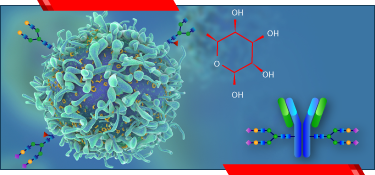
SimGlycan software for glycan structure prediction using glycan mass spectrometry.
SimGlycan® version 2.91 Released


SimGlycan now includes support for AB SCIEX TripleTOF™ 5600, updates to the glycan database and fixes to reported problems.


SimGlycan® version 2.90 Released

Rapid advancement in mass spectrometry has enabled high throughput experimentation for glycan identification. Keeping pace with such advancements, SimGlycan® can now analyze LC-tandem MS runs containing hundreds of scans in a batch. Users can load up to 1500 profiles in a project and analyze 500 in a single search run. A template for search parameters can be created to be applied to all data sets.

SimGlycan® can now identify complex glycosaminoglycan structures even when modified with substituents such as sulfate, phosphate, ethanolamine, etc. The spectra is annotated with subsequent loss of substituents from their corresponding glycosidic fragments. This functionality is most useful for verifying the presence of carbohydrate residues modified with substituents.

The built-in drawing canvas also provides the facility to modify a glycan structure drawn on the canvas not only with carbohydrate residues and linkage positions but also with different substituents that might have modified the carbohydrate residues. This enhancement makes identifying modified glycan structures heuristically much more robust.

The SimGlycan® database is now updated with over a thousand new glycans to provide more accurate search results.

SimGlycan® version 2.75 Released

SimGlycan® now includes comprehensive support for resolving glycopeptides. You can now analyze the intact structure of a completely unknown glycopeptide. SimGlycan® searches for all the possible glycan-peptide combinations and displays the percentage match between the theoretical and experimental data. This helps in understanding the degree of proximity between the probable glycopeptide structure and the experimental MS profile.

Apart from displaying the percentage match for peptide and glycan/peptide fragments, SimGlycan® also highlights all the matched and unmatched fragments, making it easier to determine the probable structure.

SimGlycan® version 2.71 Released

SimGlycan now includes improved support for all the scan types from ABI mass spectrometers in addition to a host of improvements to the search and score algorithm, the glycan database, user interface and fixes to reported problems.

SimGlycan® version 2.70 Released

SimGlycan® has now the ability to annotate mass spectra showing:

  • Cartoons of glycan or peptide fragments. Charge states of fragments are also displayed if the fragments are multiply charged.
  • Domon-Costello fragment names for glycans and standard peptide fragments names along with the corresponding charge states (if multiply charged).

SimGlycan® now includes the ability to draw and edit glycan as well as glycopeptide structures. At each step, the fragmentation of the drawn structure enables a user to compare the experimental and theoretical data, and thus to see whether his modification brings the theoretical glycan closer to the experimental data. This methodology facilitates in identifying a novel glycan structure irrespective of the glycan mass and improves the ability to come as close as possible to the unknown glycan structure.

SimGlycan® now includes a considerably enhanced ranking algorithm that is equipped to handle multi-charged product ion and fragment ion data. If the input peaklist is multiply charged, user now has the flexibility to predict glycans by comparing the product ions against the theoretical data at different charge states.

SimGlycan® version 2.60 Released

SimGlycan® has an improved sequence view. The consecutive loss of monosaccharide units with respect to a reference peak say Precursor ion m/z can now be depicted. This feature is not available in any other product, to the best of our knowledge. Furthermore, loss of branches (if any) are also depicted. This feature is especially useful since it allows users to establish the branching pattern of a glycan as well as verifying the basic units of the glycan by analyzing the spectrum. The attractively annotated spectra helps in publishing results and sharing information with colleagues.

Raw file formats generated by mass spectrometers from Bruker Daltonics mass spectrometers (APEX, micrOTOF, micrOTOF-Q and esquire series) can now be seamlessly opened in SimGlycan®. The file formats include .baf, .yep and .fid file formats.

SimGlycan® can now fragment peptides for a known glycopeptide sequence. By providing the peptide mass or the peptide sequence along with the site of glycosylation, amino acids modifications such as Cysteine modification, position of the modified amino acids, SimGlycan® generates all the probable fragments, enabling a user to check the presence amino acids by comparing it with the available experimental data.

SimGlycan® version 2.55 Released

The new version brings you enhanced accuracy in search result by allowing you to specify the number of antennae, reducing terminal monosaccharide and non-reducing terminal monosaccharides expected for a structure.

Seamless integration with ABI mass spectrometers will now enable you to open wiff and t2d files directly in SimGlycan®, without the use of third party converters. SimGlycan® is compatible with the AB Sciex mass spectrometers, including the 4800 Plus MALDI TOF/TOF™ Analyzer, the 4000 QTRAP® System and the QSTAR® Elite System.

The SimGlycan® database is now updated with thousands of new glycan entries to provide more comprehensive search results.

SimGlycan® version 2.51 Released

SimGlycan® now also analyzes glycopeptides in addition to released glycans. You can quickly resolve the structure of a glycan in a glycopeptide molecule by specifying the sequence or mass of the attached peptide moiety.

The new version also supports 20 more monosaccharides, over the existing 42.

SimGlycan® version 2.50 Released

You can now generate scatter and column plots, specify an m/z range to display specific plot sections and export plots for sharing results with your colleagues or for publication purposes.

SimGlycan® now enables you to search for glycans with chemical derivatives used for reducing end modifications even if the derivative is not available in the program's database. For example, say you are working with 2AB (2-aminobenzamide) labeled glycans and SimGlycan® does not have it listed as a derivative, simply enter the mass. SimGlycan® would analyze all possible combinations in the database and display a list of the most closely matched glycans in a ranked order.

You can now load MS/MS data in standard mzXML and mzData file formats. Using third party tools, the data from any mass spectrometer can be converted to mzData and mzXML, enabling SimGlycan® to seamlessly integrate with your mass spectrometer output.

SimGlycan® now also supports MS/MS data generated on multi-charged ions.

SimGlycan® version 2.21 Released

The upgrade includes improved data handling capabilities for SimGlycan®. Users can now expect better and faster search results using the product's new improved search algorithm.

SimGlycan® version 2.20 Released

The upgrade includes the ability to search for glycans based on their ID, sequence, composition or mass. SimGlycan® displays the glycan structure, fragments, mass, class, reaction and pathway.
In addition, you can rename the Glycan ID and the MS profile to a name of your choice amongst a host of other improvements to give you better and faster results.

SimGlycan® version 2.10 Released

With SimGlycan® 2.10, you will be able to select the proposed structures of interest manually. The program highlights the experimental m/z values that match those of theoretical fragments for easy selection and then generates an instant annotated stick spectrum or MS profile of them. It also enables you to assign your own rank to predicted structures, add comments and search fragments by their mass, name and m/z values.

SimGlycan® version 2.00 Released

The upgrade includes support for sodium as an adduct and support for 16 more monosaccharides, over the existing 26.

SimGlycan® version 1.50 Released

Export Results- With SimGlycan® 1.50, you can export glycan search results and generate an attractively formatted report for viewing or printing.

Text File Input- Supports text file format for loading MS/MS data in addition to excel files.

Manual MS/MS Data Input- You can manually type-in or copy/paste the MS/MS data into SimGlycan®.

Database Updates- Supports additional monosaccharides.


Plasmid map drawing software, map restriction sites, draw plasmid maps, an exceptional tool for restriction enzyme analysis and design cloning experiments for Gateway, TA and restriction cloning.SimVector version 4.60 released
The upgrade is now available for Snow Leopard, Mac OS X 10.6 and for Windows 7.

SimVector version 4.50 released
SimVector now includes support for loading Vector NTI® DNA (*.gb) files along with the analysis results.

Mac OS X 10.5 users, please download the program from the download section of the website and reactivate it using your email address. The Smart Updater will not work for this release, owing to changes in the file format.

SimVector version 4.23 released
This upgrade includes fixes to the file compatibility issues with SimVector 4.10 onwards.

SimVector version 4.22 released
The upgrade includes fixes to reported problems.

SimVector version 4.20 released
New in this version:

Mutagenic Primer Design- SimVector 4.20 includes a site directed mutagenesis primer design module called MutaPrimer. It designs primers for QuikChange QuikChange XL, Stratagene's site directed mutagenesis kit. The kit supports point mutations, insertions and deletions.

MutaPrimer designs mutagenic primers that fully comply with the primer design guidelines published by Stratagene for QuikChange. According to the guidelines, the most important parameters are Tm and lengths required for the flanking regions. You can start the primer search for either the DNA sequence or the amino acid sequence with just a click of a button.

SimVector version 4.10 released
New in this version:

  • Database Architecture: SimVector ported to a database architecture with improved sequence handling & analysis capabilities.
  • Increased Sequence Limits: Import longer sequences, upto 2.5 MB.

SimVector version 4.01 released
SimVector 4.01 includes fixes to reported problems.

SimVector version 4.00 released
New in this version:

  • Multiple Cloning Site (MCS) Display- Commercial companies generally display MCS's in a unique format, with enzymes one above the other in a vertical list. Version 4.00 of SimVector identifies the MCS's by interpreting GenBank header annotations when available, or you can specify them manually. It even has the smarts to list only the enzymes that cut within the MCS and nowhere else. This special format we call the Bracket View.

  • Multiple Fonts- The program can now display any enzyme or feature name using multiple fonts. It is common to list an enzyme thus: Hind III, where the bacterium of origin is listed in italics, but not the number. Coupled with the MCS bracket view, SimVector now has all the functionality to draw plasmids and export them in several vector graphic or bitmap formats.

  • ORF Search- Version 4.00 now includes the search capability to find ORFs in the chosen reading frames, identified with the selected start and stop codons, and compliant to the specified minimum length. With a click of a button, you can now ensure that the construct remains in-frame after cloning. The graphical ORF display is always ready for reference and further analysis.

  • Sequence Translation- With version 4.00 you can translate sequences for simulating expressed proteins and to check for possible reading frame errors.

SimVector version 3.00 released
New in this version:

1. Undo/Redo capability
2. Curved text support for feature names
3. Automatic feature overlap avoidance so that no feature remains "hidden"
4. Copy/paste functionality that carries feature annotations along with the sequence
5. Simplified web based activation scheme (SimVector customers, please click here for details)


Biomarker identification using TMA Foresight tissue microarray softwareTMA Foresight 3.01 Released
The upgrade includes fixes to reported problems.

TMA Foresight 3.00 Released
TMA Foresight now supports the following:

Removing Multicollinearity from Data:
Multicollinearity in a dataset is observed due to a strong correlation between independent variables. It obscures the statistical significance of such variables, leading to incorrect conclusions about the relationships between independent and dependent variables. This could be particularly problematic when you would like to study the contribution of an individual variable.

With this version, you can eliminate the effect of multicollinearity from your data at the click of a button.

Partial Correlation for Multiple Controlling Variables:
Partial correlation is used to study the relationship between two variables while controlling the effects of the third. This upgrade enables you to study the correlation between two variable by controlling the effect of more than one variable at a time.

Also includes general improvements and fixes to the reported problems.

TMA Foresight 2.50 Released
TMA Foresight is now equipped to analyze biomarker expression data in addition to performing survival analysis. You can now perform analysis such as clustering and correlation without providing survival data. You should be able to apply all the statistical techniques included directly to immunohistochemical data to identify diagnostic biomarkers, cluster them and draw inferences from other known markers. When used in conjunction with expression profiling, TMA Foresight is now a more powerful tool for evaluating and interpreting TMA data.

TMA Foresight 2.02 Released
The upgrade includes fixes to reported problems.

TMA Foresight 2.00 Released

  • Data Filtering- With TMA Foresight 2.0, filter the tissue microarray data using logical operators.

  • Correlation Analysis- Explore linear, monotonic, curvilinear, non-linear relationships between two covariates. Various correlation coefficients, viz., Phi, Cramer's V for nominal, Spearman's rank correlation, Kendall's tau-b and tau-c for ordinal and Pearson's coefficient for ratio scale, can be used for the analysis. For analyzing correlation between any two variables by negating the influence of other variables, run a partial analysis.

  • Principle Component Analysis- TMA Foresight helps you quickly generate clusters from 2D scatter plots generated from a principal component analysis using its point-and-click functionality. The Kaplan Meier plot and results of the Log Rank test are updated accordingly.

  • Test of Independence- TMA Foresight helps you study the likelihood of any two categorical variables being associated using Fisher's Exact and Chi-square tests.

Nested PCR Primers, Tagged Primers for PCR.Xpression Primer 3.03 Released
Includes fixes to the reported problems.

Xpression Primer 3.02 Released
Includes support for the latest genomic databases available at NCBI.

Xpression Primer 3.01 Released
Xpression connects to the NCBI server to BLAST search your sequences and automatically interpret the results to design specific primers.

NCBI's BLAST server underwent a few changes over the last few days.  One of the most significant being the availability of a new version of the BLAST formatter. To accommodate these changes we have released an upgrade. With this upgrade you will now be able to BLAST search your sequences seamlessly.

New in Xpression Primer 3.00 and later:

1. Includes support for the latest genomic databases available at NCBI.
2. Simplified web based activation scheme (Xpression Primer customers, please click here for details).

 
Copyright ©1994-2010 PREMIER Biosoft International. All rights reserved.